BIOME LUMINA #948/1000
Number of tickets
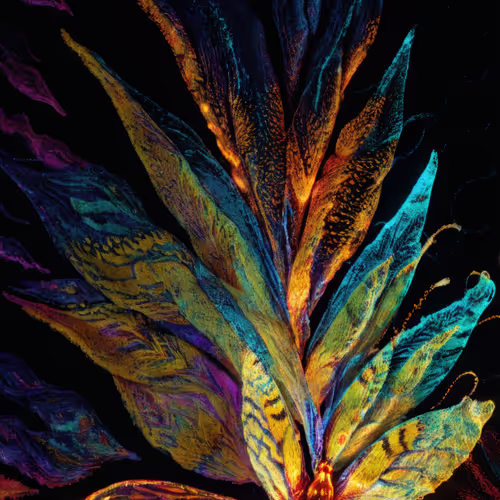
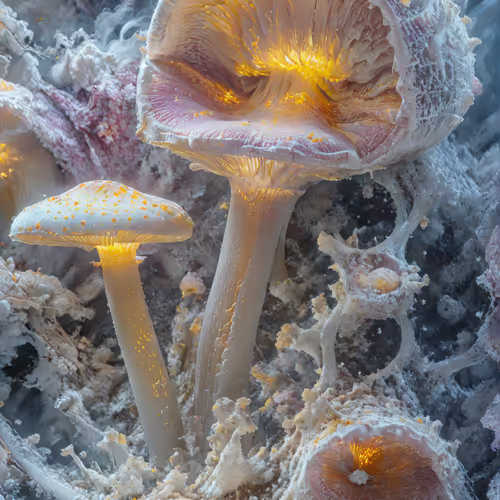
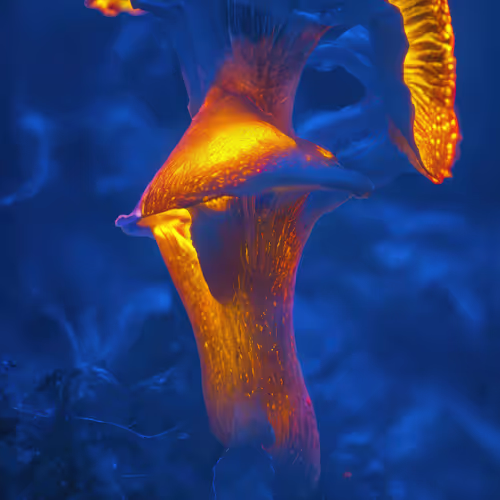
Luminiflora Aurorae, from Latin 'lumen' (light) and 'flora' (flower), with 'Aurorae' reflecting its dawn-like bioluminescence, is a specialized bioluminescent species in the Aurora Clade. It features elongated, ruffled petals with translucent textures transitioning from violet-magenta edges to amber-orange near the core, dotted with light-emitting glandular papillae. Flowers stand 15-30 cm tall, weighing 50-150 g, supported by robust yet delicate stems. Leaves are narrow, adapted to the canopy. Bioluminescence arises through luciferin oxidation, emitting blue-green light (470-530 nm), fluctuating via petal undulations. Endemic to tropical rainforest canopies at 15-25°C and high humidity, it attracts nocturnal pollinators like moths and bats. Taxonomically a new genus in the Aurora Clade, its luminescence and movement aid pollination in low light, vital for survival amid deforestation threats.